
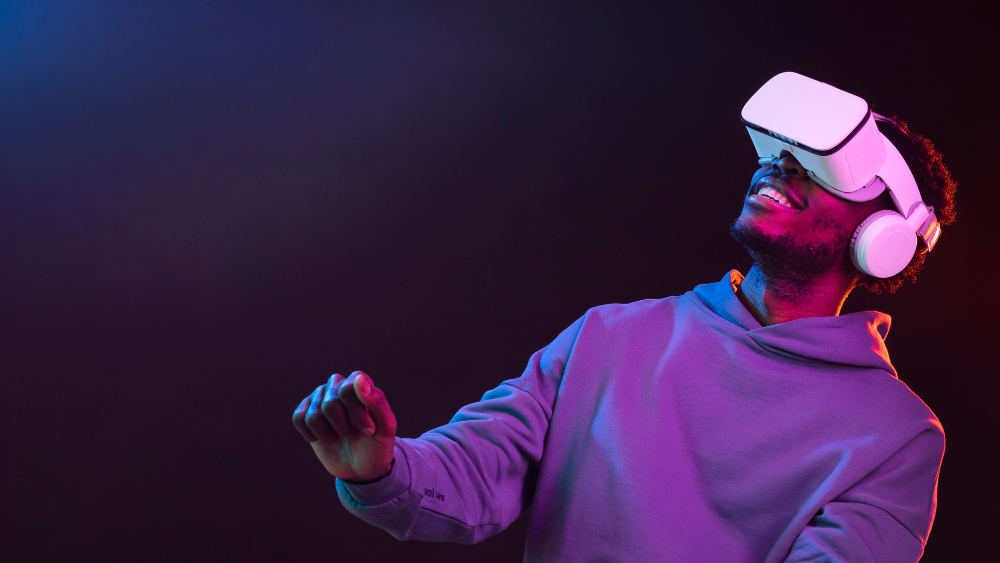
Virtual Reality (VR) is no longer just a futuristic concept—it’s a powerful technology that has become part of gaming, education, healthcare, and even business. But VR didn’t appear overnight. Its journey spans decades of innovation, from the early 1960s experiments to the cutting-edge headsets of today. Let’s walk through the fascinating timeline of VR’s evolution.
The 1960s – The Birth of Virtual Reality
The 1960s marked the earliest attempts at creating immersive digital experiences.
- 1962: Morton Heilig created the Sensorama, a machine that gave users a multi-sensory experience with visuals, sound, vibration, and even smell.
- 1968: Computer scientist Ivan Sutherland, along with his student Bob Sproull, built the Sword of Damocles, the first head-mounted display. Though it was bulky and limited, it set the foundation for future VR headsets.
These inventions were experimental, but they planted the seed for what we know as VR today.
The 1970s – Early Developments
The 1970s brought advancements in interactive computing and 3D graphics. Researchers explored how humans could interact with digital environments. Military and academic institutions started experimenting with VR for flight and training simulations.
While technology was still primitive, the decade established VR as more than just science fiction.
The 1980s – VR Goes Public
The 1980s were a breakthrough period for VR.
- Jaron Lanier, founder of VPL Research, popularized the term “Virtual Reality.”
- VPL Research developed VR gloves, goggles, and other hardware that allowed users to experience digital environments more naturally.
- NASA and the U.S. military also began investing in VR for space missions and combat training.
This era gave VR visibility and introduced it to the mainstream as an exciting new technology.
The 1990s – VR Meets Gaming and Entertainment
The 1990s brought VR into the hands of consumers, although the technology wasn’t advanced enough for mass adoption.
- 1991: Sega announced the Sega VR headset for arcades and consoles, though it never made it to the market.
- 1995: Nintendo launched the Virtual Boy, an early attempt at consumer VR gaming. It wasn’t successful due to poor graphics and user discomfort.
- VR arcades and simulators started popping up, giving people their first real taste of immersive entertainment.
Despite the hype, VR hardware of the 1990s was limited, expensive, and often disappointing.
The 2000s – Slow Growth and Research
In the early 2000s, VR development slowed down for consumers but continued in professional fields.
- Universities and research centers used VR for education and medical training.
- The military expanded its use of VR for advanced training simulations.
- Technological improvements in computing and graphics laid the groundwork for the next wave of VR.
This decade was more about preparation than consumer adoption.
The 2010s – The VR Revolution
The 2010s reignited global interest in VR, thanks to new companies and affordable technology.
- 2012: Oculus VR launched its Oculus Rift prototype, which sparked massive excitement in the tech world.
- 2014: Facebook acquired Oculus for $2 billion, signaling VR’s potential future.
- HTC, Sony (PlayStation VR), and Samsung joined the race, creating consumer-friendly headsets.
- Mobile VR, like Google Cardboard and Samsung Gear VR, made VR accessible to millions.
This decade transformed VR from a niche idea into a mainstream technology.
The 2020s – VR Today and Beyond
Today, VR is more immersive, powerful, and accessible than ever before.
- Headsets like the Meta Quest 3, PlayStation VR2, and HTC Vive Pro offer high-resolution visuals, wireless connectivity, and advanced motion tracking.
- VR is used beyond gaming: in virtual classrooms, remote workspaces, therapy, real estate tours, and even virtual tourism.
- Social VR platforms are creating new ways for people to connect globally.
The 2020s continue to push VR forward, with promises of lighter devices, better graphics, and deeper integration with Augmented Reality (AR) and Mixed Reality (MR).
Final Thoughts
The story of VR is one of persistence and innovation. From the bulky machines of the 1960s to today’s sleek, powerful headsets, VR has come a long way. Its journey shows how technology evolves from experimental ideas into everyday tools. And as VR continues to develop, its impact will only grow across industries and personal lives.
For more easy-to-understand guides on technology trends, platforms like Know How Blogs break down complex topics into simple insights.